


In one of my previous articles1 I’ve talked about the practical aspects of rollerblading and how I personally got into it. Its primary goal was to show people who are not familiar with rollerblading how cool it is and how to better approach it.
In this article I want to talk about more universal and somewhat philosophical lessons that I took from rollerblading. They may resonate with those of you who have been skating for a while already, but they may also bring some food for thoughts to those who have never skated before.
Each of the following five lessons comes from a different stage in my skating journey, which has been over 7 years by now.
💡 I recommend reading the Part 1 first, if you haven’t already.
Lesson 1: Persistence
A more accurate word here would probably be compounding, but it has become so overused by chatbots nowadays that using it feels like a disgrace. What I really mean is systematic repetition for the sake of achieving your goal. But even more importantly — repetition with the right frequency, so that every iteration reinforces the previous one.
This became very apparent to me when I just started rollerblading — I could see a huge jump in my progress after I switched from skating once a week to skating every single day. The best way I can explain it is by visualising repeating pulses, each fading away like the forgetting curve2.
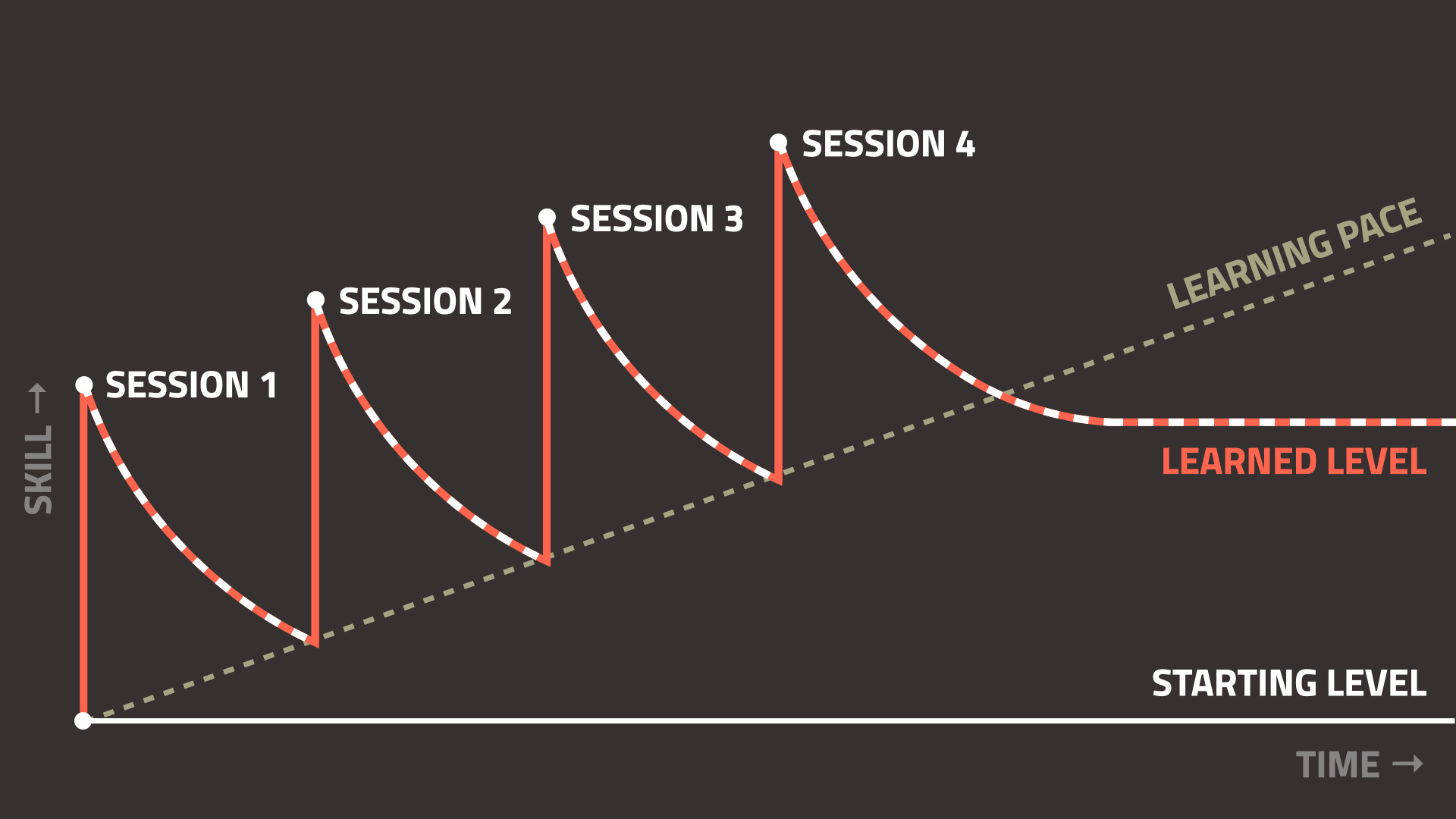
A single pulse represents a single skating session, where you get a spike of improvement in your skills. It can be a slightly better balance, a stronger muscle or an accidentally learned trick. But soon after, it starts to fade away, usually following an exponential decay3. And if you wait long enough, it will disappear completely, and the next session will feel like starting from zero.
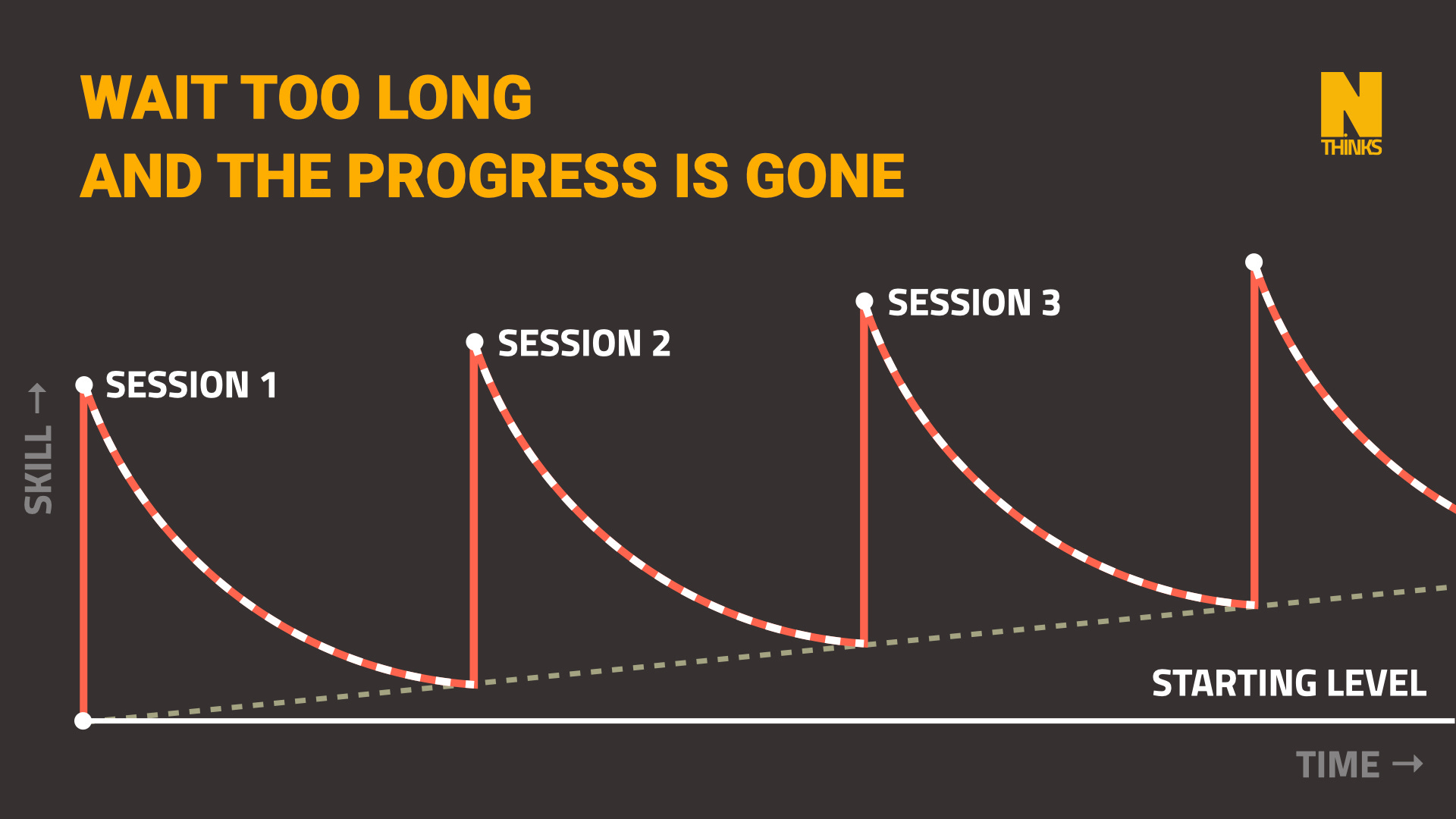
You only get the compounding effect if you repeat every session soon enough, when the effect from the previous one is still significant. This way iterations compound, creating a fast-paced progress. And that will motivate you even more to stick with it.
In other words, you could spend a whole year going out for a skate every two weeks, and be frustrated about seeing no progress whatsoever. Or you could go out skating every 2 days and in just two months you’ll be a decent skater already.
The same concept applies to many other cases. If you’re going to the gym to grow muscles or jogging to build stamina, you need to stick to the schedule, because your body returns to the old shape in a matter of weeks. If you want to grow your creator profile on social media, they recommend to post regularly, because their algorithms follow the same kind of engagement waves that fade away in a matter of days. If you’re learning a new language, you have to start using the new words immediately, otherwise your memory will erase them after a few days.
From this lesson I can give you two practical advices:
before starting anything new, make a realistic estimate of how much effort you’d have to put into it, if your goal is to achieve a specific result rather than simply doing it for fun;
once you’ve started, stick to the rhythm as much as you can.
Lesson 2: Fear
Probably the biggest lesson I’ve taken from my skating journey is the power of taking the risk. This was a memorable moment for me, when for the first time I tried to drop into a half-pipe, which I also briefly mentioned in my keynote video.
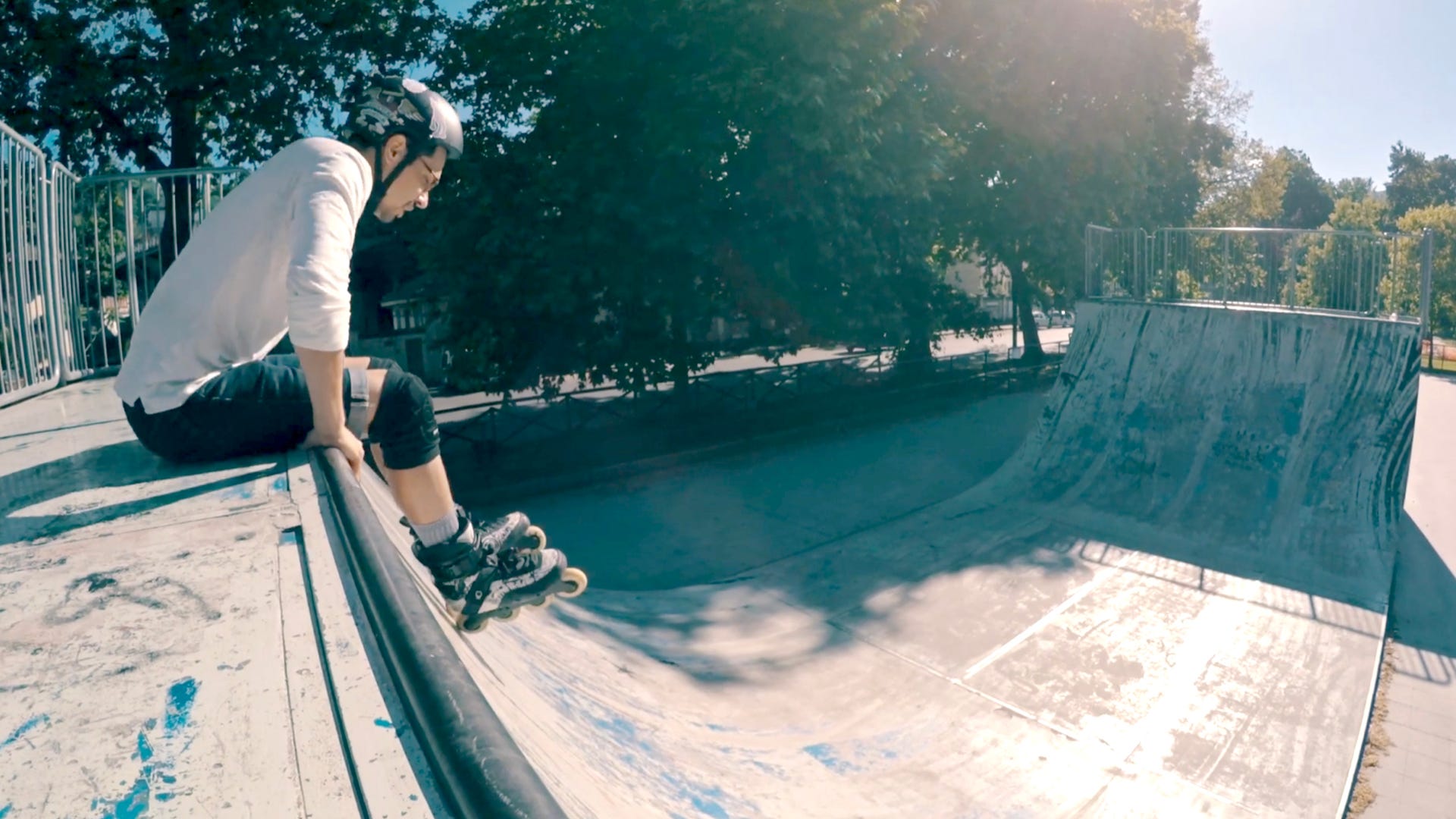
I was preparing for a nuclear-physics workshop in Zürich (Switzerland) and I’ve discovered that they had a big indoor skatepark there, which for me was a big deal. We don’t have any in Turin (Italy), and being indoor makes a huge difference in winter. So watched dozens of video-tutorials on YouTube how to drop-in, and they all said the same thing — just lean forward and fall with your face down into the floor. The curve will pick you up and you’ll be alright.
Even though I understood that they can’t be all lying and it does make sense from the physics point of view, actually doing it was super scary. The idea of losing balance and smashing my face against the floor at full speed was too intimidating. So my reflexes were pulling me back, making me fall on my tailbone every single time. Not the nicest feeling, I must say.
More than an hour later, when I was exhausted and desperate, I finally managed for a split second to turn off my brain and drop in with my face down — the very thing that my risk-averse brain was refusing to do at all costs. And they were right — the curve had picked me up and my face stayed intact.
That moment made me realise how counterintiutive fear can be. After one hour of systematically falling, I knew for certain that if I don’t lean all the way forward, I will fall again and it will hurt. But it was a predictable pain that was familiar, and I knew I can cope with it. Instead, the possibility of pain from smashing my face against the floor was something unknown and much more scary. So my instinct naturally picked a guaranteed familiar pain over potential unfamiliar pain.
We make decisions based on fear rather than opportunity in many different situations. This could be about changing your job or moving to another country or coming over to a person you’d like to ask for a date.
Fear is good for protecting us from life-threatening consequences. But when the risk in calculated and the worst-case scenario is not devastating, ignoring your fear can be a great decision. And more often then not, it’s just a matter of seconds, being it leaning forward on top of a half-pipe or just clicking Send.
Lesson 3: Community
You should never underestimate the importance of stimulating environment, which often comes from the right community. In my skating journey that boiled down to just 1-2 people who shared my specific interests.
While one-man’s persistence and discipline is often glorified, in practice you can get the same or even better persistence by simply doing it with somebody else. That’s why skating nights exist, where a group of skaters goes for a ride together. In skateparks you often see a couple of friends doing tricks, cheering each other up. Mutual accountability simply makes it easier to stick to the schedule.
Another important aspect of community is healthy competition. I remember very well one skate night after which I ended up in the centre of Turin with two other skaters, one of which was really good at jumps. And as it often happens, we started picking different obstacles to jump over, cheering each other up. And there was one tall rounded piece of marble, clearly out of my comfort zone, which to me seemed intimidating. But once I saw the other guy jumping over it, I felt more brave to try it myself, and it turned out not as difficult as I expected.
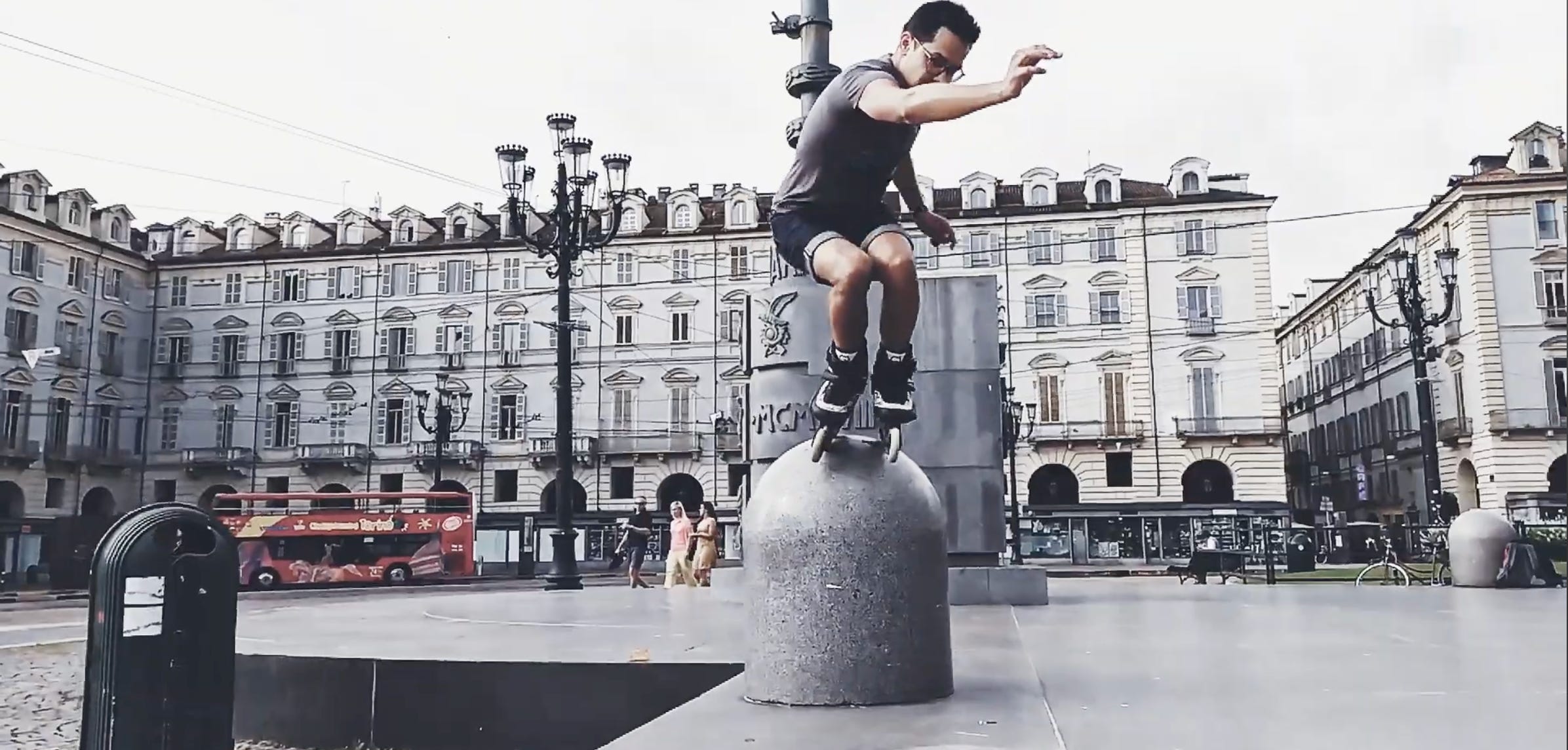
Once you experience this enough times, you realise that the fear is often over-protective. It adds quite a bit of margin below your actual ability, simply to keep you safe. As a result, something you’re totally capable of feels scary until you actually do it at least once. And having the hype coming from others in the community makes it easier to suppress and overcome this initial fear.
Obviously, one still has to be reasonable and not ignore the fear completely. You don’t want to overshoot and try something well above your abilities, because then you may end up with serious injuries.
Lesson 4: Superpower
After skating regularly for about 2 years I’ve realised that some of my abilities have improved so much compared to what they were before, that I could call them superpowers. And it’s not just about the fact of improvement itself, but also about being way above the level of an average person. Rollerblading gives you quite a few of such abilities that make you stand out.
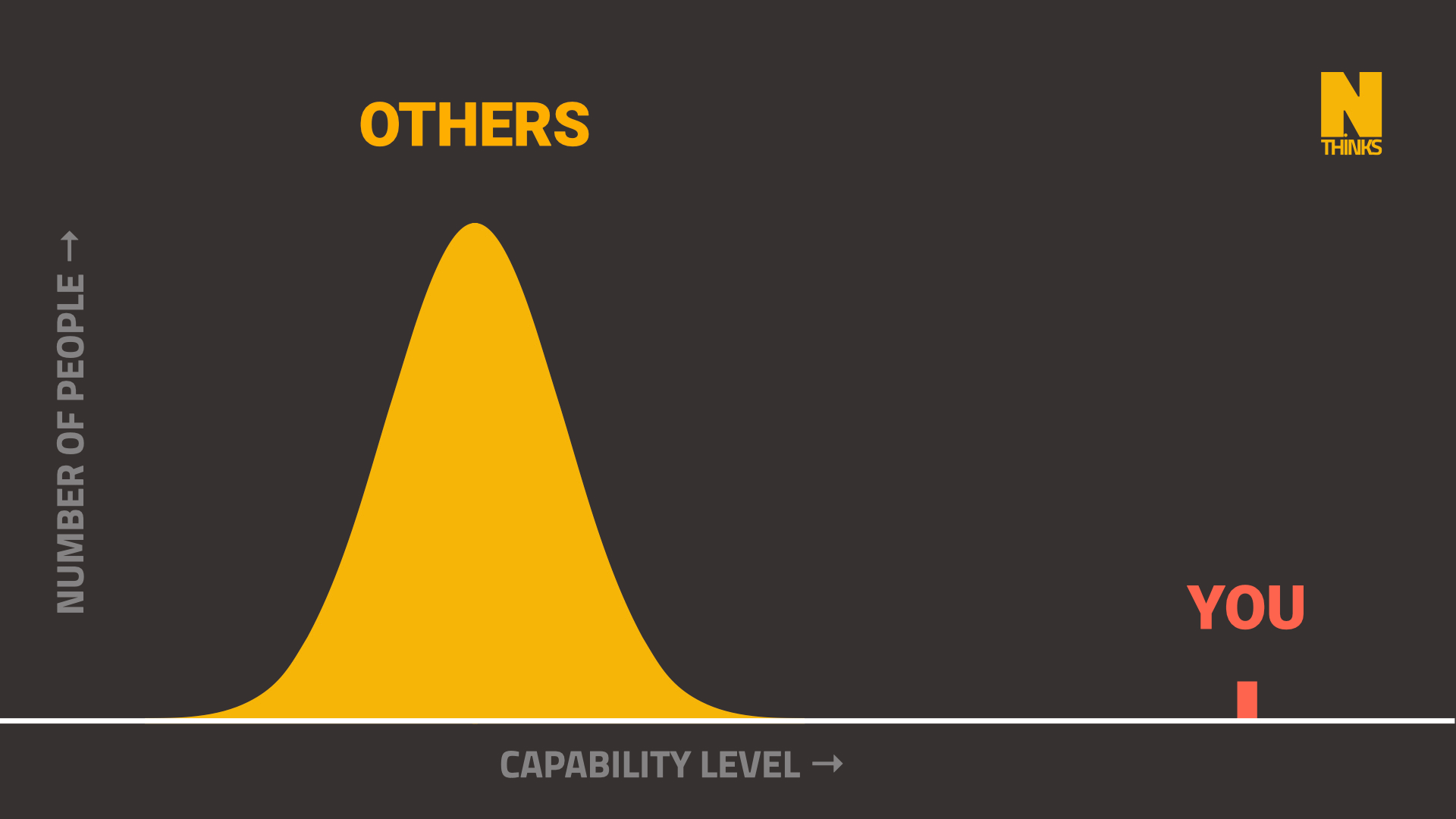
For example, my balancing became so good that I could easily tie my shoes while standing on one foot, without any visible effort or body wiggle. Or I could smoothly hop around up and down stairs, over fences or other urban obstacles because my legs became much stronger after hundreds of jumps in every session. Or after Wizard skating, where I had to hold the whole body weight balanced on a single edge of a skate at all times, my ankles became so strong that getting a sprained ankle seemed almost impossible.
But because these features develop so slowly, they can go easily unnoticed for month or years until something happens where they become apparent. For me that moment came when I was once running down the stairs in my building and unexpectedly landed on wet floor that had just been washed. It was extremely slippery, but thanks to all those superpowers, I’ve managed to slide on a single foot for almost a meter, without losing balance, then caught myself with the other foot and simply kept walking like nothing happened. It all lasted a fraction of a second, but I felt like a freaking superman after that. I knew for certain that if this had happened before I started skating, I would have fallen very badly, and probably would end up with a sprained ankle or wrist while trying to save myself.
Of course, this applies to all sorts of things, way beyond just the physical strength. I’ve had a similar realisation about my ability to notice logical inconsistencies or statistical biases, which simply comes from my academic background in nuclear physics — also something that isn’t common in a daily life of an average person.
I believe that knowing about things that make you stand out by a large margin is quite important. Not only to better position yourself in the society or professionally, but also to be more aware of other people and to have more realistic expectations from them. Otherwise, it’s easy to end up expecting too much from others, which will cause unnecessary stress to them and frustration to you.
Lesson 5: Deconditioning
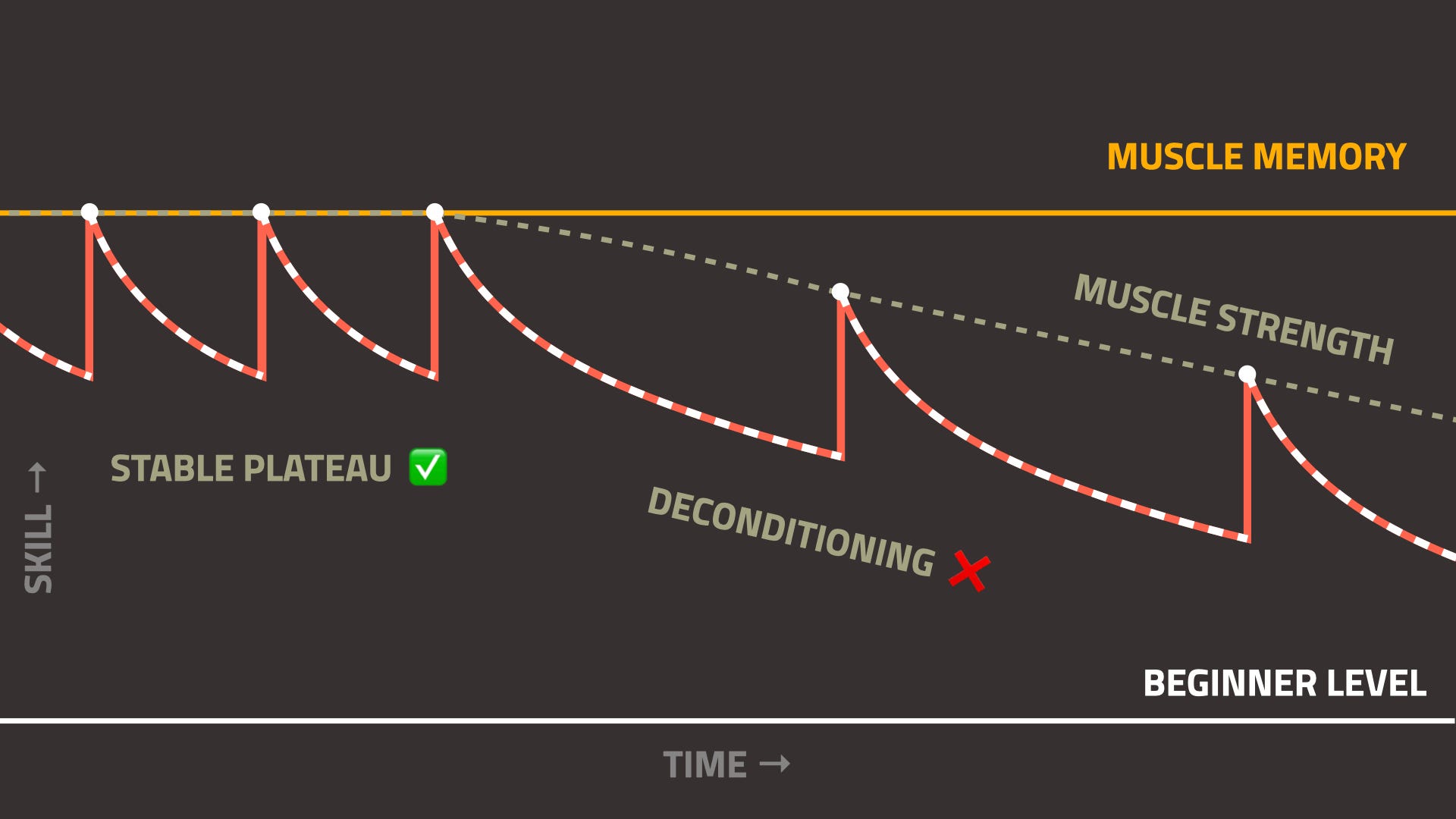
This is something I’ve learnt after not actively skating for a couple of years. In Lesson 1 I’ve mentioned how regular skating sessions build up your skills. But eventually you may reach a sort of plateau, where you’re not pushing yourself outside of your comfort zone any more and your skill level remains stable. That’s when you simply do the tricks you already know, just to enjoy yourself. Besides, the muscle memory is so good that once you’ve repeated certain moves enough times, your body remembers them pretty much forever.
So even though I was only skating once every few weeks during that phase, I didn’t feel like my skills were getting any worse. I still had the same good balance, I still could drop into a half-pipe without any fear, I still could do all the Wizard-skating moves that I had spent hundreds of hours practicing in the past. What has changed though was the strength of my muscles and joints. My legs became weaker, my ankles and knees became less flexible, and my body in general became less used to me falling on the ground. On top of that I wasn’t getting any younger either.
That disconnect between the technique stored in my muscle memory and the actual physical strength of my body turned out to be fairly dangerous. While I felt perfectly confident doing a certain quick turn or jumping from a certain height, that was actually too much for my untrained body. And while I could ignore some little pain here and there at the beginning, eventually one landing delivered the right combination of angle and force to my ankle that made me pretty much unable to do half of the tricks. It would hurt too much as soon as I put enough pressure on it. Only now, after about 6 months, it seems to not hurt any more, giving me a second chance to go back into it more carefully.
This part is the most difficult, because there is no natural feedback mechanism telling you what is beyond your physical abilities. When I was learning to skate the fear was doing it for me. So one has to consciously think before every trick and then check with the body after, to decide if it’s ok to raise the bar a little higher. Quite a humbling experience, I must say.
And I’ve seen the same thing play out in many other aspects of my life, being it solving differential equations with pen and paper, programming websites in Django framework, video-editing in Davinci Resolve, 3D modeling in Blender or even speaking German. I would forget the little tricks or method names or keyboard shortcuts or words that were essential for me to actually do those things quickly and efficiently. So even though the fundamental understanding of everything I’ve ever worked on are still deep-seated in my brain, I would need to put quite a lot of effort and time to bring back all those surface-level practical skills until they become automatic again. It would still be less than the first time, when learning it from scratch, but certainly nowhere close to zero.
Therefore, like in the Lesson 1, everything you’re good at right now has its own minimum repetition frequency required to simply maintain this level of skills. When you stop doing it often enough, the deconditioning will slowly degrade your skills until some fundamental level. And from that I have two practical advices:
be realistic about your abilities if you want to do something that you’ve been good at long time ago — it will likely be not as quick and effortless as you might imagine, potentially putting you in a bad situation;
be intentional about preserving your skills — if you want to stay fluent in something that is not part of your life any more, you have to put something in place that forces you to keep doing it often enough (a hobby, a community, a side hustle, etc).
Epilogue
There are many more lessons I could pull out of rollerblading of course, but these five seem to me the most significant and universal. And of any skills that you’re trying to preserve or develop, learning lessons from life is probably the most important one. So no matter what, keep learning.
And if you have some lessons of your own that you’d like to share, the Comments section is all yours. Stay safe 🙌🏼
What rollerblading taught me: Part 1/2, NazarThinks