


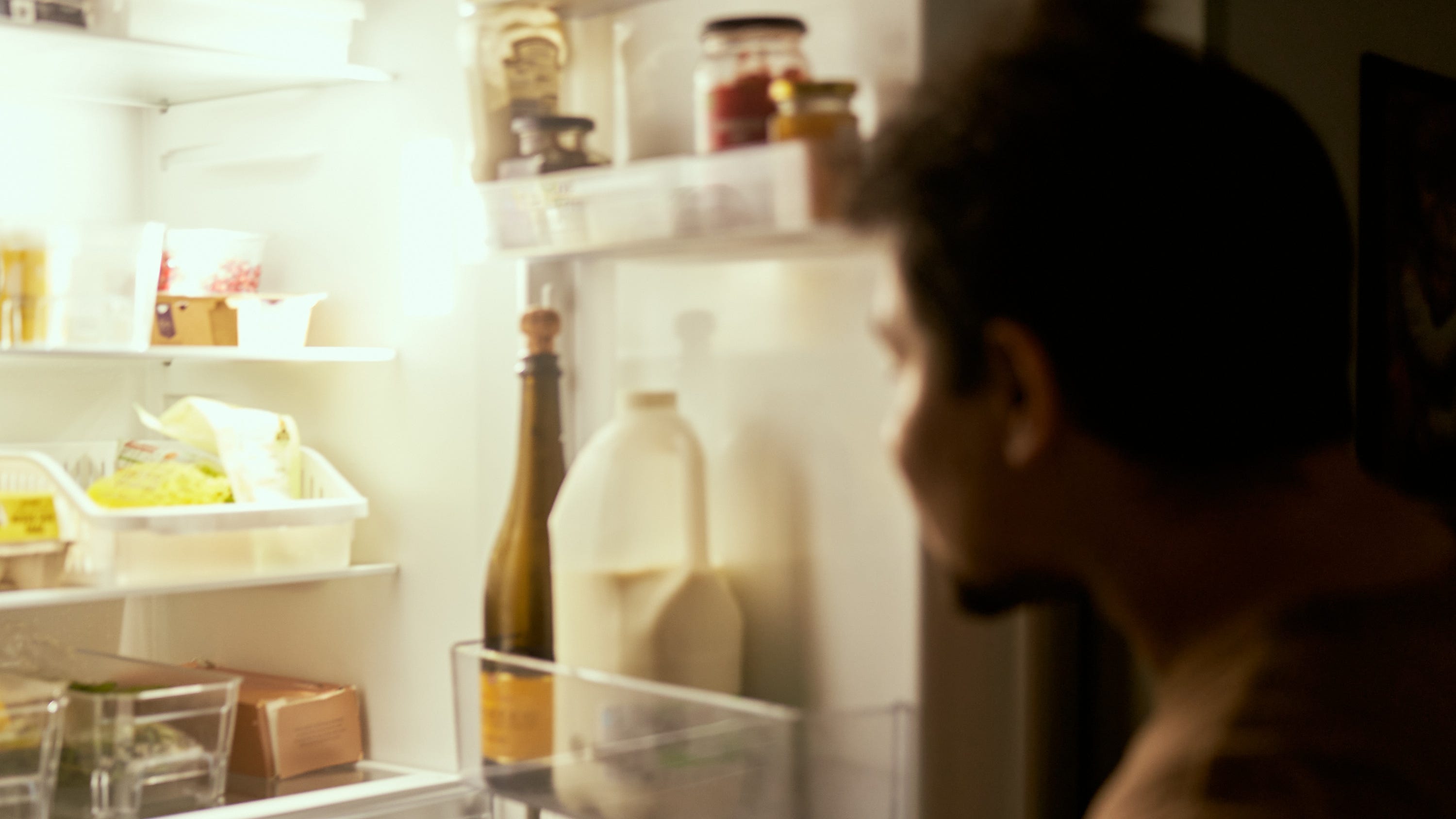
Everyone who had spent at least few days living with me has developed a supernatural skill — they can feel my stare at their back 👀 roughly 3 seconds after opening their fridge. Some probably feel it even when I’m not there 😁
When researching online I’ve seen people mentioning 20 seconds, and I know a couple of people who can leave it open for over a minute! That makes my eye twitch 🙈
I can’t help wondering where does this attitude come from? I thought everyone was conditioned as a kid to close their fridge, like in this opening scene from Young Sheldon, but apparently something went wrong at some point.
My hypothesis is that it’s the influence of the movies and TV ads, where people are often portrayed taking their time to look into the fridge, deciding what to take or even what to cook – all while keeping it open. It’s supposed to reflect the image of abundance, the lifestyle you’d like to relate with. But what looks good for an ad or a movie scene does not necessarily translate well to real life.
The reason I’m bugging everyone about it, including you 🫵🏼 now, is that keeping a fridge open is really wasteful. And the longer you keep it open — the more wasteful it is. I’m sure you’d agree that wasting is bad, but what exactly is being wasted? Let’s look at it from a scientific point of view.
🎯 The purpose
What is the main purpose of a fridge?
If you say “to keep the food cool“ you’d be technically correct. Yet I would say that conceptually this is not the end-goal, but rather a practical means of achieving the real purpose – preserve the food for a longer period of time.
There are other ways of food preservation like salting, pickling, preservative chemicals or high-temperature sterilisation, which also slow down the process of food going bad. Refrigeration is simply a more universal method that can be applied to a larger variety of products, also without affecting their taste and nutritional composition in most cases.
🦠 Microbes are to blame
The process of “food going bad“ is mostly caused by microscopic organisms doing their job: mold or other fungi growing on the surface, bacteria spoiling the fats and proteins in the milk, etc. The larger is the population of these microbes → the faster they will do their job → the faster the food will go bad.
Proper sterilisation kills all those microbes, leaving no population to grow. That’s why canned food can stay safe to eat for years, as long as you don’t open it. Yet as soon as you open the can, the air gets in together with some microbes inevitably present in it, which will start doing their job and multiplying. From that moment the easiest way to slow down this process is by lowering the temperature, which is what a fridge is designed for.
❄️ Keeping it cool
Let’s see how a fridge keeps your food cold. Conceptually it’s made of two main components:
a double-walled container with some insulating material between the outer and inner walls – meant to keep the temperature inside separated from the outside;
a cooling plant – meant to cool down the stuff inside when it gets too warm.
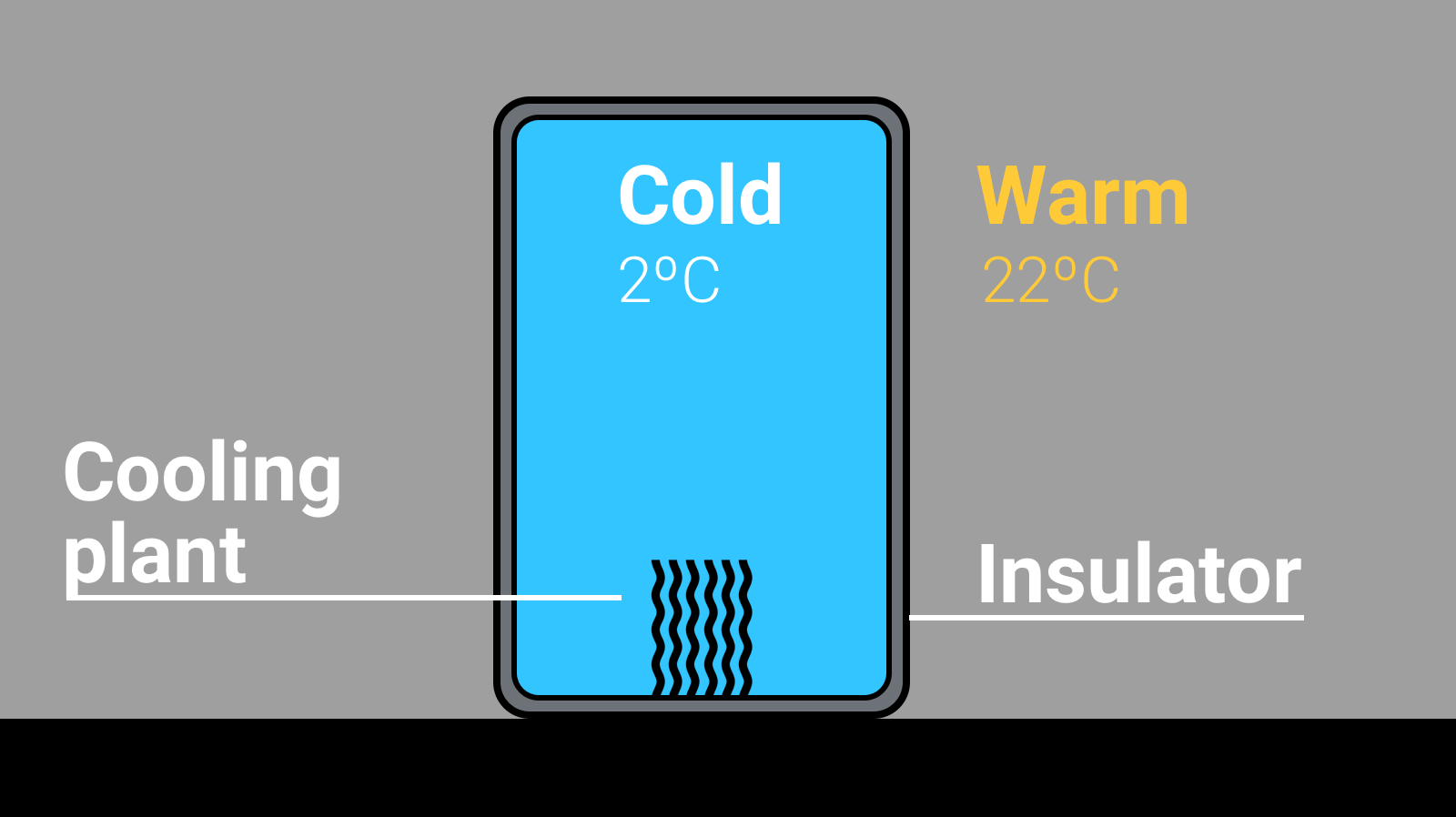
While the container is a passive object, the cooling plant is an active device that consumes energy. Since it’s impossible to create a perfect thermal insulation, a tiny bit of heat will always pass through those double walls, slowly raising the temperature inside. Therefore, the cooling plant will turn on from time to time, whenever the temperature inside gets noticeably higher than it should.
This is what drives the energy consumption of your fridge, even during the night – when it stays closed all the time. As you can imagine, when you open the door, thermal insulation breaks down → heat will enter inside the fridge more quickly → the cooling plant will have to work harder to compensate for it. This is obvious.
But does it actually make any difference?
Some people would just say NO. Some went further and made simple thermodynamic calculations to prove that it makes no appreciable difference, like in this old Reddit thread: “you could open up the fridge and replace all the air 10000 times before it would cost 1 dollar” 😮
But I’ll go even further…
🌡️ Warm air not welcome
I say that keeping the fridge open does make a difference, but to appreciate it, one has to approach the problem as a scientist – looking at the whole picture and taking into account all the relevant effects, rather than simply applying a textbook formula to a single specific feature.
Let’s start with that thermodynamic calculation, which does miss a few aspects. In practice the fridge does not always stay fully loaded (or even 2/3 loaded). Quite often it’s mostly empty, until you stack it up with fresh groceries – in that case the relative impact of the incoming warm air gets much greater. Also the temperature difference that the fridge has to maintain can be significantly higher, especially on hot summer days without AC. I would be pretty unhappy staying in a kitchen at 20ºC (or 68ºF), which the calculation was done for.
But still, even if it would take only 1000 times to waste 1$ instead of 10000 – you still probably wouldn’t care. So let’s move to more significant aspects of opening the fridge door.
🔧 Faster breakdown
For the fridge to operate efficiently it has a temperature sensor inside, connected to some logics unit, which decides when to turn on the cooling plant based on the measured temperature. Cold air is denser and heavier than warm air, therefore the temperature sensor is usually placed in the upper part of the fridge, to detect the rising of the temperature earlier.
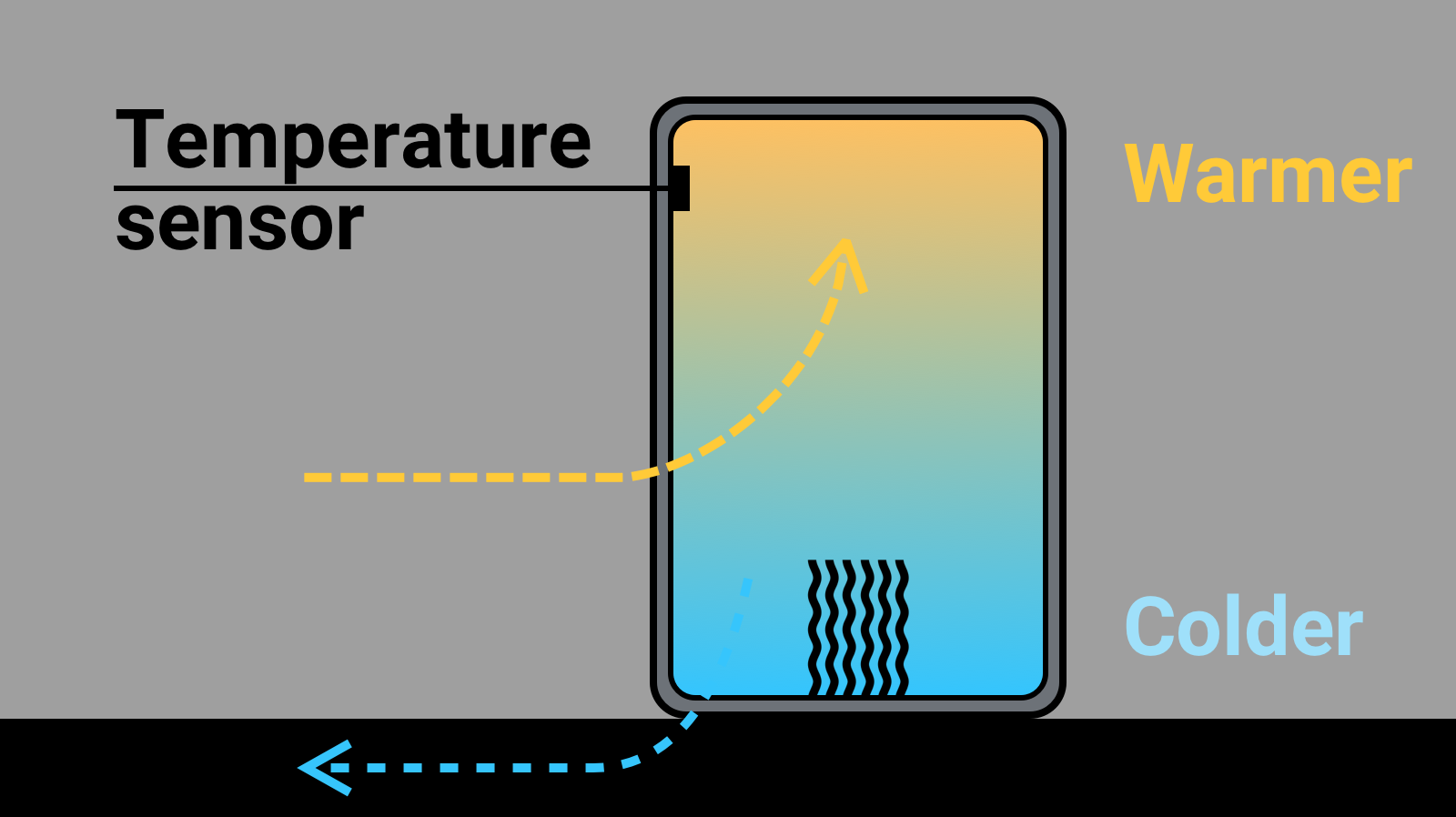
Now, when you open the fridge, the heavy cold air will start escaping, while the warmer air will be entering from the room, accumulating mostly at the top of the fridge – right where the temperature sensor is. So even though the relative amount of heat leaving the fridge is negligible compared to all the heavy and cold food inside, the air itself around the sensor will get noticeably warmer. This is enough to make the fridge think that it’s too warm and turn on the cooling plant.
Effectively the fridge could just stay off, letting the food inside slowly cool down the warmer air around it. As the Reddit guys said, the actual amount of heat absorbed by the food would be negligible – but the fridge doesn’t know that. It will turn on for a minute or two anyway, since heat-exchanging process through air is quite slow.
So even though very little heat is lost when you keep the fridge open, it will do extra unnecessary cycles of turning ON and OFF, consuming electricity and wearing down the motor of the heat pump. And the last thing you want is your fridge to break down, leaving you without fresh food for days, forced to suddenly arrange the ordering, moving and installation of bulky and heavy double-walled containers. So letting your fridge stay in the OFF state for as long as possible is in your best interest.
Of course this largely depends on the logics implemented in the electronics of any specific fridge, which in principle could be designed to account for such effects. But I doubt that the majority of fridges have this level of sophistication, especially the cheaper ones. If you happen to work in this industry – please share your knowledge in the comments.
❄️ Frost build-up
When warmer air enters the cold fridge, it condensates on the cold surfaces of the fridge – creating tiny droplets of water. On the coldest side of the fridge, which is the one meant to cool the air inside – those water droplets will freeze, turning into frost.
The frost works as insulation between the cooling wall and the air inside, making the heat exchange less effective. It will cause your fridge running longer to remove the same amount of heat → more waste of energy and longer periods of noise. Eventually you’ll have to manually defrost your fridge, unless it has the auto-defrosting feature. In any case that’s additional waste of energy that can be avoided.
💦 Condensation on the food
The same condensation that turns into frost on the cold wall, remains as water on the surface of all the products that the warm air got in contact with. Naturally, the longer you keep the door open → the larger amount of warm air enters inside → the more water droplets will build up → the higher will be the humidity inside your fridge. And that’s exactly what microbes need to multiply.
As a result, population of harmful microbes will grow higher, making your food go bad faster. This does not apply to the food that is hermetically sealed, since the condensation will stay outside, without getting in contact with the actual food. But all your 🌱 salad leaves inside opened plastic bags, or 🧀 cheese wrapped in plastic foil or 🥦 vegetables lying in the open – they will be affected.
This is something that no smart electronics can prevent. It can only be done by something smarter, like your brain.
💡 This is why most fridges have dedicated containers at the bottom to store fresh vegetables. That’s the place where it would take the longest for the condensation to build up – it’s closed from all sides, making it harder for the warmer air to get in, while positioning at the bottom ensures that the heavier cold air stays there for longer.
All this goes directly against the very purpose of the fridge – keeping your food fresh for as long as possible. So by keeping the door open you’re doing the opposite – increasing the fraction of your food that will be wasted. Not very sustainable.
🍔 Culture of abundance
For sure some people consciously choose to treat a fridge like a piece of art in a photo-gallery, slowly moving their gaze across the shelves while deciding what to pick. Even knowing about all the downsides they might still keep doing it – it’s their own decision after all.
What I find more disturbing is that lots of people do it unconsciously, following the patterns they’ve seen somewhere and accepted as a standard, without ever questioning it. I suspect that movies and TV ads play a major role in creating this standard. In those ads successful people are portrayed exactly like that – relaxed, staring at the fridge with a curious and slightly dreamy face, as if they have all the time in the world and no pressure whatsoever. And if the food goes bad – there is always more at the grocery store 💁🏻
I’m sure I look less “chill and successful“ when opening the fridge already knowing what I want and where it is, and getting it in 2 seconds max. In the conventional perception of the modern society that dreamy face says “abundance“, while my organised face says “scarcity”. And everyone prefers abundance.
Just a few examples of those ads here: Freshpet, Westinghouse, LG, JustEast or some movie scenes. And apparently people cared about it more in the past, according to this opening “fridge scene” from Young Sheldon (S02E13).
🎬 Epilogue
Considering all the effects I’ve talked about, I hope that I’ve convinced you that being mindful about opening a fridge is not pointless. At the end of the day everyone decides for themselves what defines their user experience the most: is it wasting less energy and food, or is it having less noise in their kitchen or is it having a relaxed and dreamy relationship with their fridge.
Hopefully now you’re more conscious and intentional about your choice, whatever it is. And if you’ve learned something new on the way – I’m even more happy 😊
It’s always easier to do a shallow analysis, considering only what is on the surface. But a deeper look with a systematic scientific approach often reveals underlying mechanisms that might turn the initial conclusion upside down.
This is the power of a scientific mindset – the foundation of my thinking process.
P.S. Some companies do take this door-opening aspect seriously though, like Samsung with their AI Vision Inside or LG in their ad: “The Fridge Made For Gazing“.
It took me about 2 minutes of thinking 🧠 to come up with this chain of reasoning. Yet it took me at least 2 hours of typing 👨🏻💻 to prepare this article.
The easiest way to make it worthwhile is letting thousands of people read and put this in action. So if you’ve found it interesting – please Share with your friends, colleagues and peers!